Omron’s BP742N is a digital‚ upper arm monitor designed for accurate blood pressure and pulse rate measurement in adults‚ featuring IntelliSense technology․
What is the Omron BP742N?
The Omron BP742N‚ part of the 5 Series‚ is a sophisticated digital blood pressure monitor intended for home use by adults․ It’s designed to accurately measure blood pressure and pulse rate‚ providing valuable insights into cardiovascular health․ Utilizing Omron’s IntelliSense technology‚ the device ensures comfortable inflation and deflation during measurements․
This monitor isn’t just about numbers; it also detects irregular heartbeats during measurement‚ alerting the user to potential concerns․ The BP742N features a large‚ backlit display for easy readability and stores up to 100 readings for two users‚ facilitating tracking over time․ It’s a reliable tool for proactive health management․
Key Features and Benefits
The Omron BP742N boasts several key features enhancing user experience and accuracy․ IntelliSense technology provides personalized inflation for comfort‚ while the large backlit display ensures clear readings․ A significant benefit is the detection of irregular heartbeats‚ prompting further medical evaluation if needed․
The device also includes a hypertension indicator‚ alerting users to potentially high blood pressure․ Its wide-range D-Ring cuff accommodates various arm sizes‚ and the memory stores readings for two users (100 each)․ Body movement detection minimizes errors‚ and it’s a trusted tool for consistent monitoring․
Intended Use of the Device
The Omron BP742N is specifically designed as a digital monitor for measuring blood pressure and pulse rate in adult individuals․ It’s intended for home use‚ enabling regular monitoring of cardiovascular health․ This device is not for continuous monitoring during medical procedures or in hospital settings․
A crucial function is its ability to detect irregular heartbeats during measurement‚ providing a warning signal alongside the reading․ This feature doesn’t diagnose arrhythmias but encourages consultation with a healthcare professional․ It’s a tool for proactive health management‚ not a substitute for medical diagnosis․
Safety Precautions
Always purchase Omron products from authorized resellers to ensure safety and quality․ Prioritize your health by using trusted‚ clinically accurate devices․
General Safety Guidelines
Omron’s BP742N is intended for self-measurement and monitoring‚ not for diagnosis․ Consult a healthcare professional for interpretation of results and medical decisions․
Ensure the cuff is the correct size for your arm circumference to avoid inaccurate readings․ Do not use the device during physical activity‚ smoking‚ or immediately after eating․
Avoid using the monitor on a limb with an intravenous line‚ or on patients prone to arrhythmia․ Keep the device dry and away from extreme temperatures․ Regularly inspect the cuff for damage‚ and discontinue use if any issues are found․
Contraindications – When Not to Use
Do not use the Omron BP742N if you have undergone surgery on your arm‚ have a skin rash or irritation‚ or are experiencing limb impairment․ This device isn’t suitable for pregnant women or individuals with severe arrhythmia․
Avoid use on limbs with intravascular catheters or if you’ve had a mastectomy‚ as readings may be inaccurate․ The monitor is designed for adult use only and shouldn’t be used on infants or children․
If you experience discomfort or pain during measurement‚ stop immediately and consult your doctor․
Potential Risks and Warnings
Incorrect use of the Omron BP742N can lead to inaccurate readings․ Repeated measurements can cause arm discomfort due to constricted blood flow․ Do not self-treat based solely on readings; always consult a healthcare professional for diagnosis and treatment․
The device detects irregular heartbeats but doesn’t diagnose them․ Seek medical advice if irregular heartbeats are frequently detected․ Avoid using the monitor in moving vehicles or unstable environments․
Keep the device dry and away from extreme temperatures․ Do not disassemble or modify the monitor․
Device Components & Overview
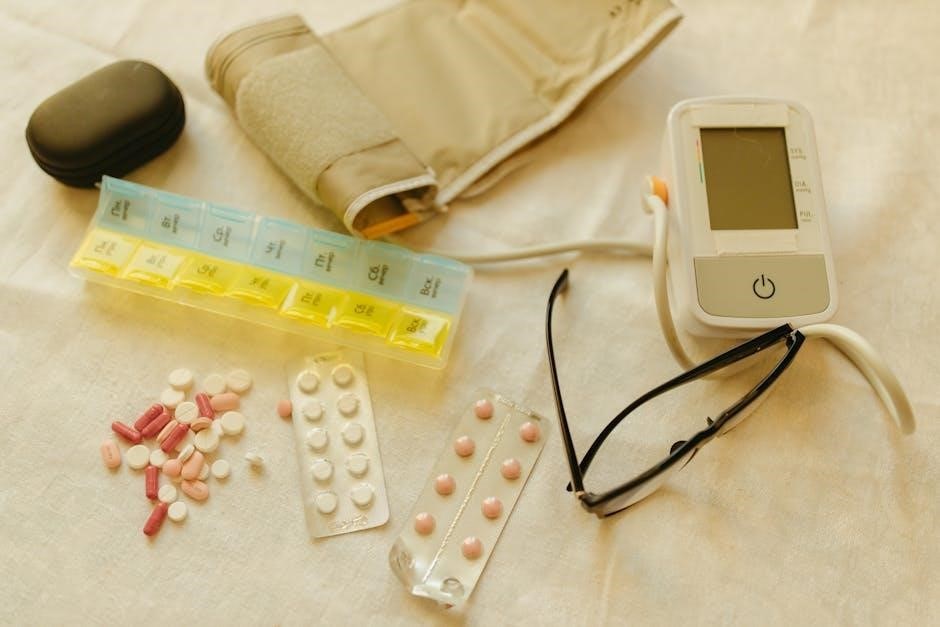
The Omron BP742N includes a monitor‚ wide-range D-Ring cuff (HEM-RML3T)‚ and batteries‚ designed for easy blood pressure measurement at home․
Identifying the Parts of the BP742N
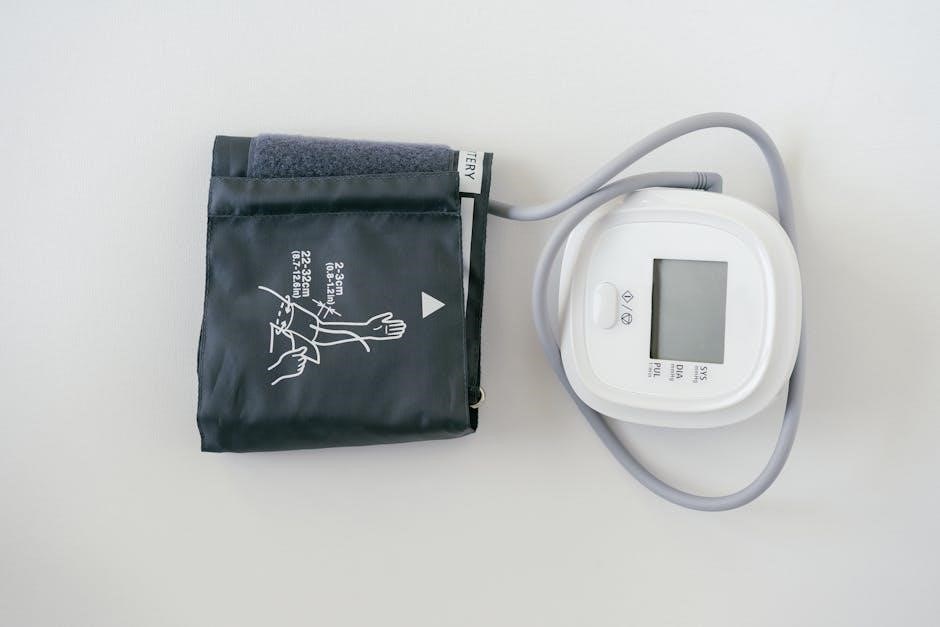
The Omron BP742N consists of several key components․ Firstly‚ the main monitor unit houses the display‚ buttons for operation‚ and the internal circuitry․ Secondly‚ the cuff‚ specifically the HEM-RML3T‚ is a wide-range‚ D-Ring style cuff designed to fit various arm sizes comfortably and securely․ It connects to the monitor via a tube․
Additionally‚ the device requires batteries for power‚ typically AA batteries․ The display screen shows blood pressure readings‚ pulse rate‚ and various indicators like irregular heartbeat symbols․ Finally‚ the start/stop button initiates and terminates measurements‚ while memory buttons allow access to stored readings․
Understanding the Display Symbols
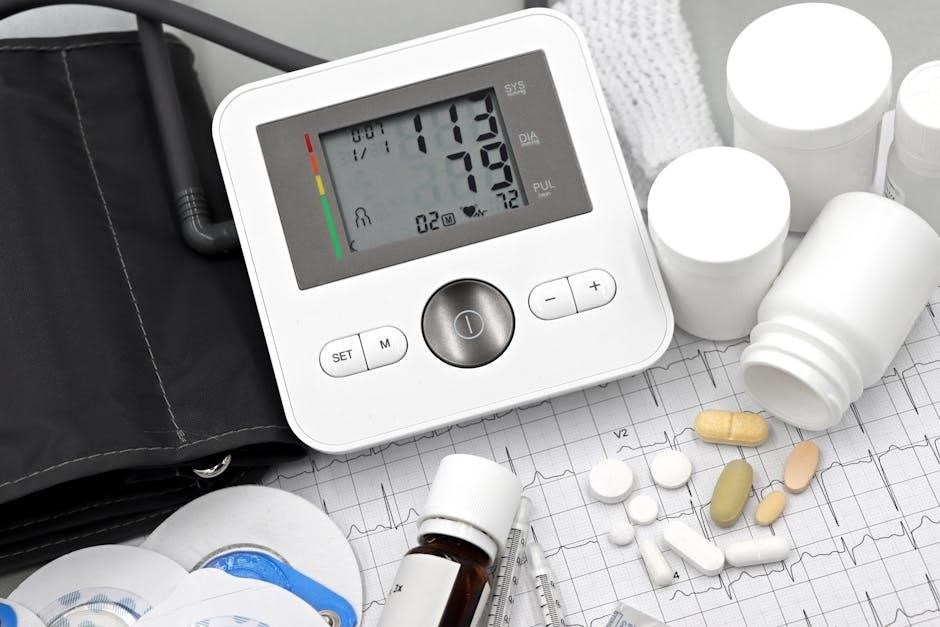
The Omron BP742N’s display utilizes several symbols to convey information clearly․ A heart symbol indicates pulse rate‚ displayed in beats per minute․ Systolic and diastolic blood pressure readings are shown with mmHg units․ The “Irregular Heartbeat” symbol alerts users to potentially irregular rhythms detected during measurement․
A hypertension indicator appears if readings exceed established guidelines․ The memory symbol signifies stored readings are available․ A low battery indicator warns of insufficient power․ The body movement symbol indicates movement during measurement‚ potentially affecting accuracy․ Understanding these symbols is crucial for interpreting results effectively․
D-Ring Cuff Explanation
The Omron BP742N features a wide-range D-Ring cuff designed for comfortable and secure fitting on various arm sizes․ Unlike traditional cuffs‚ the D-Ring shape minimizes pressure points and ensures proper alignment during measurement․ This innovative design helps to improve accuracy and reduce discomfort․
Correct cuff application is vital; the artery mark should align with the brachial artery․ The D-Ring facilitates easier self-application․ Ensure the cuff isn’t too tight or loose․ Proper cuff fit‚ aided by the D-Ring‚ contributes significantly to reliable blood pressure readings․

Setting Up Your BP742N
To begin‚ install batteries correctly‚ then attach the cuff securely to your upper arm․ Finally‚ set the current date and time for accurate data tracking․
Installing Batteries
To install batteries in your Omron BP742N‚ locate the battery compartment‚ typically on the underside or back of the device․ Gently slide open the compartment cover․ Insert two AA batteries‚ ensuring correct polarity – match the positive (+) and negative (-) ends as indicated inside the compartment․
Confirm the batteries are securely seated․ Close the battery compartment cover until it clicks shut․ If the display doesn’t illuminate or the device doesn’t power on‚ double-check battery installation and replace with fresh batteries if needed․ Always use new‚ standard AA alkaline batteries for optimal performance․
Attaching the Cuff Correctly
Proper cuff attachment is crucial for accurate readings with your Omron BP742N․ Position the cuff on your upper arm‚ approximately one inch (2-3 cm) above your elbow․ Ensure the artery mark on the cuff aligns with your brachial artery․
The cuff should be snug‚ but not too tight – you should be able to slide one finger comfortably underneath the cuff edge․ Use the D-Ring cuff for easier application and consistent positioning․ Avoid applying the cuff over clothing; bare skin is recommended․ Secure the cuff firmly‚ ensuring it doesn’t slip during measurement․
Setting Date and Time
Accurate date and time settings are essential for correctly tracking your blood pressure readings on the Omron BP742N․ Press the “Start” button‚ then the “Memory” button to access the date and time setting mode․ Use the “+” and “-” buttons to adjust the year‚ month‚ and day․
Repeat this process to set the hour and minute․ Confirm each setting by pressing the “Memory” button again․ Proper date and time ensure your stored data is organized chronologically‚ allowing for effective monitoring of your cardiovascular health over time․

Taking a Measurement
Ensure proper technique for accurate readings: sit quietly‚ apply the cuff correctly‚ and remain still during inflation and deflation of the BP742N․
Proper Measurement Technique
To obtain reliable results with the Omron BP742N‚ preparation is key․ Sit quietly for five minutes with your feet flat on the floor and your back supported․
Avoid caffeine‚ alcohol‚ and smoking for at least 30 minutes before measurement․ Position the cuff on your upper arm‚ ensuring the artery mark aligns with your brachial artery․
The cuff should be snug‚ but not too tight – typically one finger’s width should fit under the cuff edge․ Remain still and do not speak during the measurement process․
Maintain a relaxed posture and avoid crossing your legs․ Proper technique ensures the most accurate blood pressure readings from your BP742N monitor․
Interpreting Your Blood Pressure Readings
Understanding your readings is crucial for managing your health․ Blood pressure is displayed as two numbers: systolic (top number) and diastolic (bottom number)‚ measured in mmHg․
Generally‚ a normal reading is considered less than 120/80 mmHg․ Elevated readings fall between 120-129 systolic and less than 80 diastolic․ Hypertension‚ or high blood pressure‚ is 130/80 mmHg or higher․
The BP742N may include a hypertension indicator to visually alert you to elevated readings․
Consult your healthcare provider to interpret your readings accurately and determine appropriate action based on your individual health needs and history;
Irregular Heartbeat Detection
The Omron BP742N features irregular heartbeat detection‚ a valuable tool for identifying potentially concerning heart rhythms during measurement․ If an irregularity is detected‚ the monitor will display an error message alongside your blood pressure reading․
This feature doesn’t diagnose arrhythmia‚ but alerts you to consult a healthcare professional for further evaluation․ Occasional irregular beats can be normal‚ but frequent occurrences warrant medical attention․
Don’t disregard the irregular heartbeat indicator; it’s a prompt to seek professional advice and ensure your cardiovascular health is properly assessed․

Memory Function & Data Management
The Omron BP742N stores up to 100 readings per user across two user profiles‚ enabling convenient tracking of blood pressure trends over time․

Storing and Recalling Readings
The Omron BP742N automatically saves up to 100 measurement sets for each of the two users․ To recall stored data‚ press the “Memory” button on the device․ Repeatedly pressing this button cycles through the previously recorded readings‚ displaying the date and time of each measurement․
The monitor displays the average reading for each session․ You can view all stored data for a specific user by continuing to press the “Memory” button․ This feature allows for easy monitoring of blood pressure fluctuations and provides valuable information for healthcare professionals․
Two-User Memory Mode
The Omron BP742N offers a convenient two-user memory mode‚ allowing two individuals to track their blood pressure readings on a single device․ To switch between users‚ locate and press the “User” button on the monitor before taking a measurement․
Each user has a dedicated memory bank capable of storing up to 100 readings․ This feature eliminates the need to manually record data separately and simplifies tracking blood pressure trends for multiple family members․ Ensure the correct user is selected before each measurement to maintain accurate records․
Deleting Stored Data
The Omron BP742N allows you to delete stored readings from its memory․ To delete all readings for the currently selected user‚ press and hold the “Memory” button until all readings are erased․ The display will confirm the deletion process․
Please note that this action is irreversible‚ and once deleted‚ the data cannot be recovered․ It’s recommended to only delete data when necessary‚ such as when starting a new monitoring period or correcting errors․ Always double-check the user selection before deleting to avoid accidental data loss․
Troubleshooting Common Issues
Omron BP742N may display error messages; inaccurate readings can occur due to movement or cuff fit‚ and the device might fail to power on․
Error Messages and Their Meanings
The Omron BP742N utilizes error messages to indicate potential issues during measurement․ An “Err” display often signifies issues with the cuff‚ such as improper attachment or leaks․ If you encounter this‚ re-apply the cuff ensuring a snug‚ but not overly tight‚ fit․
Another common error relates to body movement detected during inflation; remain still during readings․ A different error code may appear if blood pressure is outside the measurable range․ Consult the full manual for a comprehensive list of error codes and their corresponding solutions‚ ensuring accurate and reliable blood pressure monitoring․
Inaccurate Readings – Possible Causes
Several factors can contribute to inaccurate blood pressure readings with the Omron BP742N․ Incorrect cuff size is a primary concern; ensure the D-Ring cuff fits your arm circumference properly․ Movement during measurement significantly impacts results‚ so remain still and relaxed․
External factors like talking or crossing your legs can also elevate readings․ Improper cuff placement‚ or positioning the monitor at the wrong height‚ introduces errors․ Review the manual for correct technique and consider repeating measurements if initial results seem unusual․
Device Not Powering On
If your Omron BP742N fails to power on‚ first verify the batteries are correctly installed with the proper polarity․ Weak or depleted batteries are a common cause; replace them with fresh ones․ Ensure the battery compartment is securely closed․
Inspect the battery contacts for any corrosion or debris‚ cleaning them gently if necessary․ A faulty power adapter (if applicable) could also be the issue․ If the problem persists after these checks‚ contact Omron customer support for further assistance and potential troubleshooting steps․
Maintenance and Care
Regularly clean the monitor and cuff with a soft‚ damp cloth․ Avoid harsh chemicals․ Store the device in a cool‚ dry place‚ away from direct sunlight․
Cleaning the Monitor and Cuff
To ensure accurate readings and prolong the life of your Omron BP742N‚ regular cleaning is essential․ Always disconnect the cuff from the monitor before cleaning․ Use a soft‚ damp cloth to gently wipe the monitor’s surface and the cuff material․ Avoid using abrasive cleaners‚ solvents‚ or strong detergents‚ as these can damage the device․
For stubborn stains on the cuff‚ lightly dampen the cloth with a mild soap solution‚ then wipe clean with a damp cloth and dry thoroughly․ Do not immerse the monitor or cuff in water․ Ensure both are completely dry before reassembling and storing․ Proper cleaning contributes to the device’s longevity and hygiene․
Storage Instructions
Proper storage is crucial for maintaining the accuracy and lifespan of your Omron BP742N blood pressure monitor․ Store the device in a cool‚ dry place‚ away from direct sunlight‚ extreme temperatures‚ and humidity․ Avoid storing it in locations with dust or corrosive fumes․
Do not store the monitor with the cuff tightly wrapped around it for extended periods‚ as this could potentially damage the cuff material․ Keep the device in its original case‚ if available‚ for added protection․ Ensure batteries are removed if the monitor will not be used for a prolonged time to prevent leakage․
Battery Replacement
Replace the batteries when the low battery indicator appears on the display․ Use four size AA alkaline batteries – do not mix old and new batteries‚ or different types of batteries․ Open the battery cover located on the back of the monitor and insert the new batteries‚ ensuring correct polarity (+ and -) as indicated inside the compartment․
After replacing the batteries‚ reset the date and time․ Dispose of used batteries responsibly‚ following local regulations․ Frequent battery replacements may indicate a potential issue with the device; contact customer support if this occurs․